Monticello Micro-Greens
850-512-5880
info@monticellomg.com
Order Now!

Monticello Micro-Greens




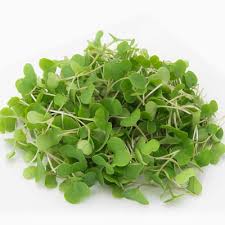
Kale - Red Russian (Organic)
Kale microgreens are the younger version of the full-grown leafy vegetable. Similar to cabbage, the leaves are very tough, and they come in different shapes. It’s one of the more popular veggies to grow and eat due to its wide span of health benefits. As microgreens, the leaves are tiny compared to the mature veggie with its curly or straight leaves. Kale microgreens have a mild, sweet flavor. They are a good source of antioxidant vitamins & minerals, aids in metab- olism, wound healing, healthy bones, rich in fiber & iron. Aids in anti-inflammatory, immune system & improves brain health.
$9.00 (5.5x7.5 - 1 pad)
$3 5.00 (11x15 - 4 pads)
$55.00 (11x30 - 8 pads)
Health benefits:
Kale is jam-packed with good things and known for its many health benefits! It contains vitamins A, C, K1, and B6, as well as minerals, fiber, antioxidants, potassium, calcium, magnesium, copper, and manganese.
Kale microgreens are known to be the most nutrient-dense superfood on the planet! They have several healthful benefits, and at the same time, low in calories. As microgreens, they hold four times the nutrient levels than the full-grown version! Avitamin C, polyphenols, and flavonoids. It has vitamin A, vitamin K, vitamin B6, manganese, calcium, copper, thiamin, folate, iron, riboflavin, and potassium. Kale is known for its many health benefits. It has cancer-fighting properties and also helps against oxidative damage. Eating kale helps the body improve its immune system and maintain strong, healthy bones.
- Packed with vitamins A, C , K1 and B6 minerals
- High in Fiber
- Has Anti-oxidants, potassium, calcium, magnesium, copper and manganese
- Strengthens Immune System
- Aids in Reproduction
- Increases Metabolism
- Converting food to energy
- Good for brain development
- Reduces free radicals
- Slows down Cancer, Alzheimer's, and other diseases
- Help maintian Healthy bones
- Removes waist from Kidneys
- Promotes wound healing
- Helps with nerve functioning
- Blood sugar regulation
- Regulates heartbeat
- Synthesizes protein
How to Use:
Kale microgreens best used fresh as an edible garnish to showcase the green’s earthy, nutty, and subtly sweet flavor. They provide increased textural and visual appeal and are traditionally added at the end of cooking as a finishing element to prevent the leaves from wilting. Kale microgreens can be tossed into salads, used as a bed of greens for seafood, or piled over egg-based dishes, grain bowls, and stir-fries. They can also be used as a topping over tacos, pizza, and pasta, layered into sandwiches and burgers, stuffed into pitas, stirred into curries and soups, or rolled into sushi. In addition to using Kale microgreens whole, the greens can be pureed into sauces, dips, and pesto or blended into smoothies and juices. It pairs well with radishes, carrots, cucumbers, mushrooms, tomatoes, squash, collard greens, brussels sprouts, asparagus, cauliflower, cheeses such as parmesan, feta, and mozzarella, cranberries, pistachios, and meats including pork, beef, and poultry. The microgreens will generally keep 5 to 7 days when stored in the refrigerator in a sealed container.
Flavor:
It has a nutty, slightly sweet taste. Some say it tastes like broccoli and smells like mustard.
Nutritional Benefits:
Kale microgreens are filled with many important and vital minerals. Vitamin A, crucial for cell division, growth, vision, immunity, and reproduction. Vitamin B6, plays a key role in metabolism, converting food into energy; brain development; and regulation of immune responses. Vitamin C, crucial for the development, growth, and repair of body tissues and serves as an antioxidant, protecting cells against the effects of free radicals, which are molecules produced during the breakdown of food or exposure to radiation, tobacco smoke, and other external sources. (Free radicals are associated with the development of heart disease, cancer, Alzheimer’s disease, and other diseases.) Vitamin E, neutralizes or reduces free radicals, protecting molecular and cellular components, preventing free radicals from oxygenating cholesterol, thus reducing the chances of stroke or heart disease. Vitamin K, plays a key role in wound healing, blood clotting, and bone growth. Calcium is critical in building and maintaining healthy bones and teeth and proper heart, nerve, and muscle functioning and may help reduce the risk of heart disease. Copper helps to maintain healthy bones; proper functioning of nerves, blood vessels, and the immune system; the formation of red blood cells; and proper iron absorption. Fiber-rich phosphorus is important in managing the body’s energy use and storage, filtering and removing waste from the kidneys, and promoting nerve conduction. Folate belongs to the B vitamins and is crucial in the formation of red blood cells, proper cellular growth and function, and reduced risk of brain and congenital spinal disabilities during pregnancy. Iron helps produce the oxygen-carrying component (hemoglobin) in red blood cells, enhances the body’s energy use, and strengthens the immune system. Magnesium is crucial in numerous biochemical reactions in the body, regulating blood pressure, supporting the immune system, and helping with muscle and nerve functioning, reducing the possibility of kidney stones. Manganese is important for bone and connective tissue development, blood sugar regulation, and normal brain and nerve function. Potassium is needed for proper cellular functioning, regulating the heartbeat, synthesizing protein, regulating muscle and nerve functioning, and metabolizing carbohydrates.
☜Back